Heavier compliance burdens. Steeper pathways to financial sustainability. For housing owners, asset management is a bigger, more complicated, and more important job than it used to be.
Read More
Scroll down to sign up for our monthly e-newsletter—and get news, insights, and practical tips from HDC’s development, asset management, and policy and industry support teams delivered to your inbox.
Heavier compliance burdens. Steeper pathways to financial sustainability. For housing owners, asset management is a bigger, more complicated, and more important job than it used to be.
Read MoreAccess to housing has never been a more essential bridge to health, safety, and opportunity. In communities across Oregon, our partners created stable places for seniors, immigrant families, and formerly homeless veterans to live, learn, work, care, rest, and find refuge and belonging.
Read MoreIn the heart of North Portland’s Kenton neighborhood, REACH Community Development’s 189-unit housing development provides affordable homes to residents at risk of homelessness and families displaced by gentrification.
Read MoreOne of the first multifamily housing developments in the Pacific Northwest to be built mostly offsite, Arygle Gardens uses the cost advantages of modular construction, coupled with shared living arrangements, to reduce operating costs and keep rents deeply affordable.
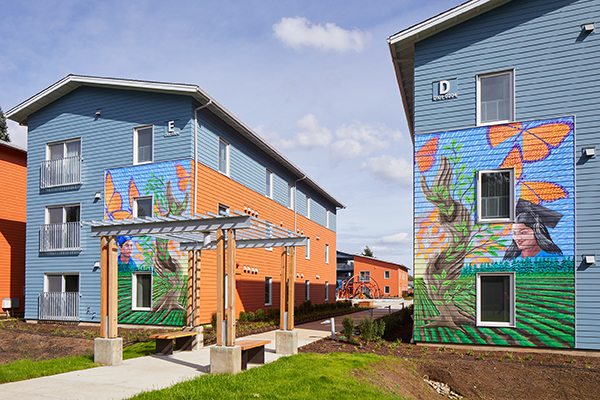
Read MoreA thorough renovation brings fresh life to Bienestar’s 20-year-old housing community, creating a more beautiful and comfortable living environment for the Latinx and immigrant families who reside there.
Read MoreA passionate educator and group facilitator, Kimberly specializes in helping new asset managers gain the skills and tools they need to do their jobs.
Read MoreHow green is modular construction, when it comes to multifamily housing? This is the fourth part of a series addressing practical and values-based questions about modular building that matter to nonprofit owners and developers of affordable multifamily housing.
Read MoreHDC worked with Holst Architecture and LMC Construction to support REACH in making cost-conscious design choices aligned with resident and community priorities and to turn a unique site challenge into a design opportunity.
Read MoreFarmworkers and their families comprise about 180,000 people in Oregon today. Farmworker Housing Development Corporation’s newest housing community provides affordable homes for farmworkers—and for families working in nonagricultural industries, too.
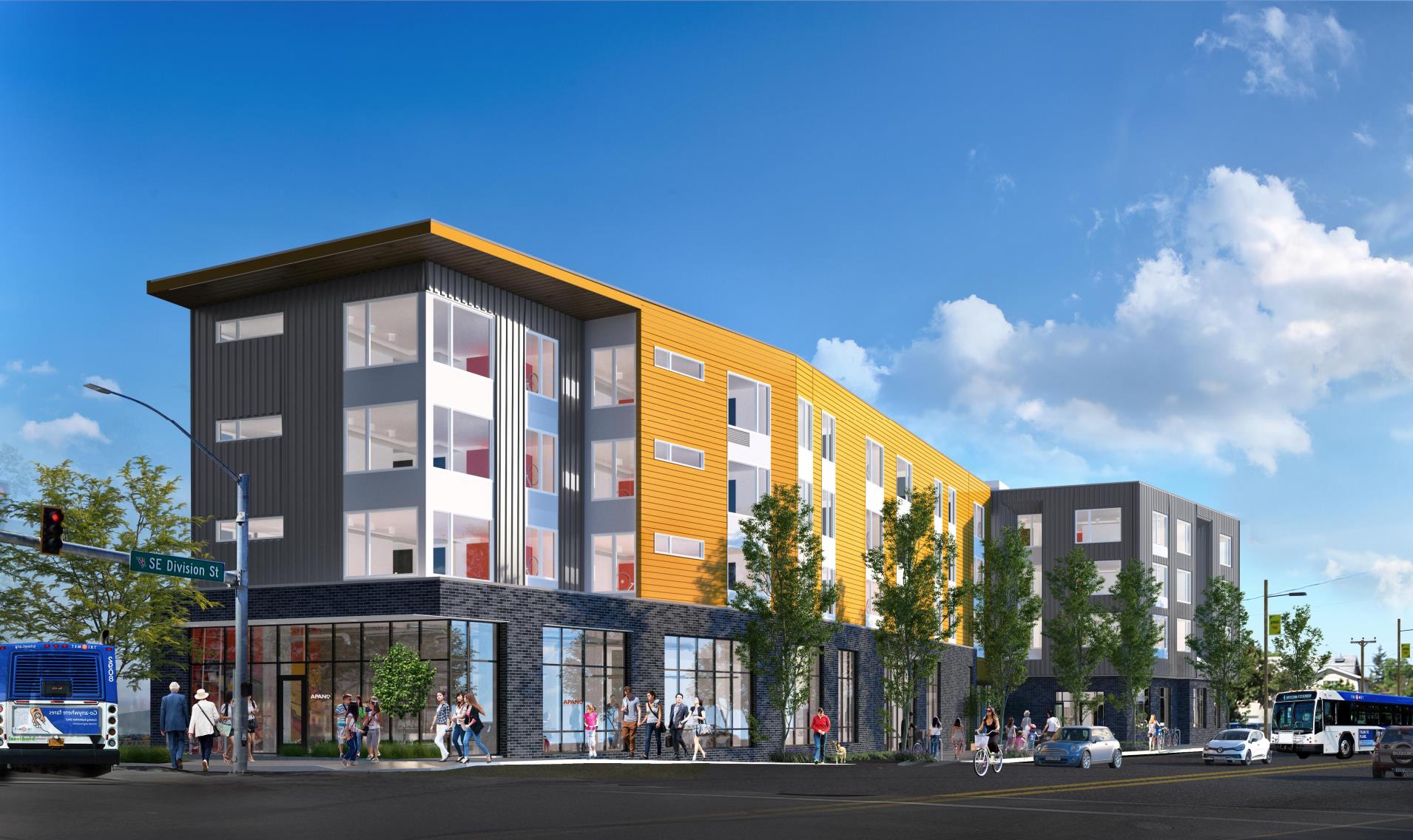
Read MoreGrassroots group Asian Pacific American Network of Oregon (APANO) led the community visioning process that drove the development of the Orchards of 82nd, a new mixed-use building in a transitioning East Portland neighborhood. Now APANO is putting down roots as the owner of the building’s commercial condominium.
Read MoreTransition Projects’ LISAH development is a first-of-its-kind modular cohousing community that will provide deeply affordable homes to individuals transitioning from homelessness. The first modules dropped on August 26 and 27, and a community event will celebrate the project’s launch this Friday.
Read MoreHow does the quality of modular buildings compare to that of conventionally built structures? This is the third part of a series addressing practical and values-based questions about modular building that matter to nonprofit owners and developers of affordable multifamily housing.
Read MoreOften, the unfunded capital needs of affordable housing properties are understood as unanticipated crises that owners are responsible for fixing. What if we shift the frame?
Read MoreHow will using modular construction affect your project’s development process? This is the second part of a series addressing practical and values-based questions about modular building that matter to nonprofit owners and developers of affordable multifamily housing.
Read MoreHow will using modular construction affect your project’s hard costs? This is the first part of a series addressing practical and values-based questions about modular building that matter to nonprofit owners and developers of affordable multifamily housing.
Read MoreWhat are the financial, social, and environmental impacts of making the shift from onsite to off-site construction? This series addresses practical and values-based questions about modular building that matter to nonprofit owners and developers of affordable multifamily housing.
Read MoreHow can we get to a place where there is reliable funding to support the long-term physical needs of Oregon’s affordable housing? We can start with two steps.
Read MoreAffordable housing is part of our public infrastructure, like roads and schools. Whose responsibility is it to pay for the physical needs of these properties as they age?
Read MoreParents of young children trade broken plumbing and grinding rent inflation for affordability, comfort, convenience, and more time with family at ROSE Community Development’s new housing community, Metro reports.
Read MoreOur client needed to understand her affordable-housing portfolio’s future capital needs on an aggregate level. But her data was siloed in property-specific CNAs that didn’t speak a common language.
Read More