
Property Stabilization Articles and Links
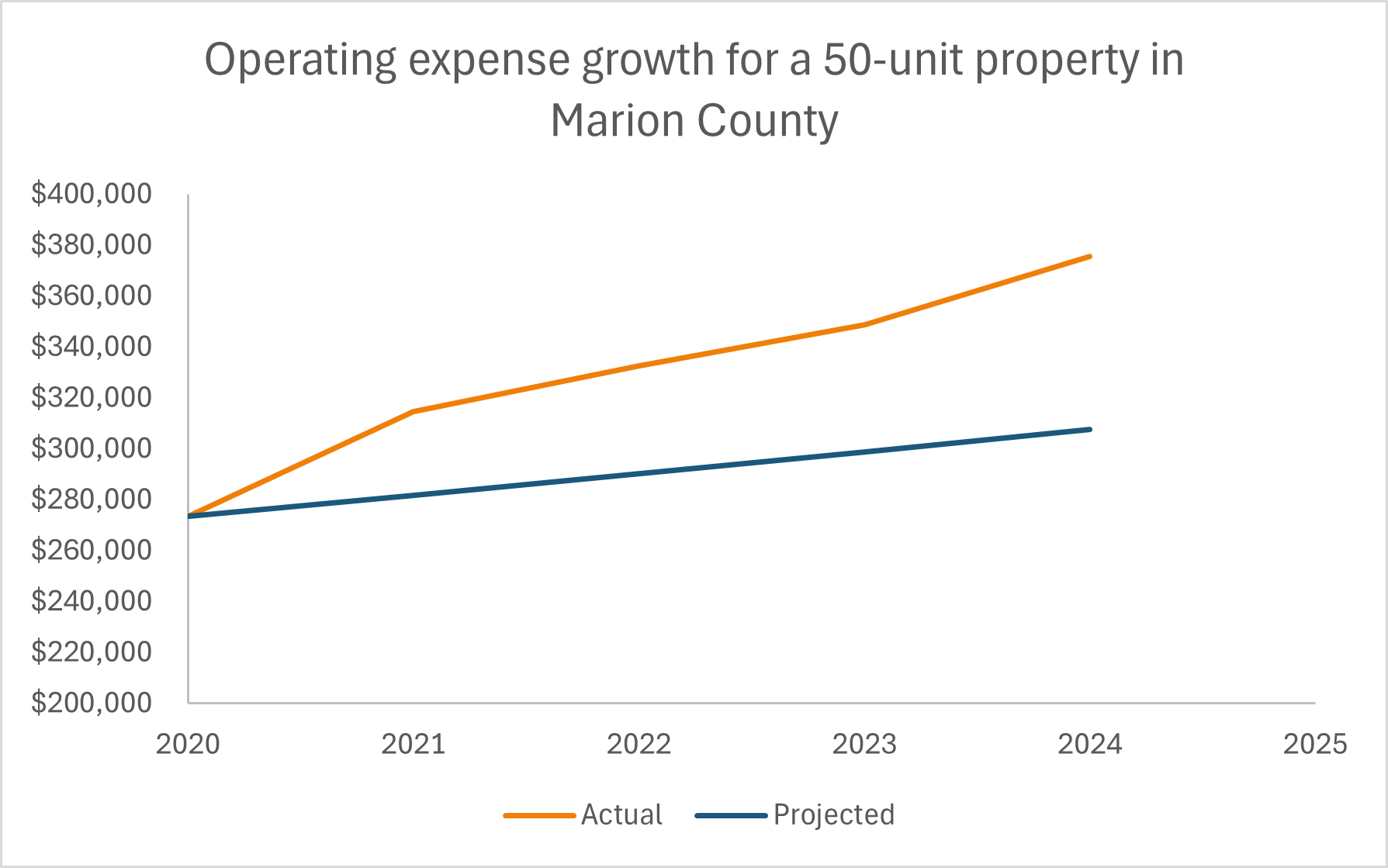
Operating expenses for an average 50-unit apartment building in Marion County reached $375,650 in 2024—up 37% since 2020, or nearly triple the expected percentage increase, assuming 3.0% annual growth. Source: CohnReznick
The operating environment for affordable housing has radically shifted since 2020. Expenses have increased at a rate more than double what was projected, families are less able to pay rent, and many properties—including newer ones—have no financial path to adjust. Consequently, Oregon is on the brink of losing affordable homes even as we are increasing investments to build them.
The Oregon legislature voted in 2025 to invest $50 million in preservation capital to support emergency stabilization of properties throughout the state that are at immediate risk of loss. This capital is helping to restore the financial viability of a portion of Oregon’s at-risk affordable homes, enabling working families, seniors, and people exiting homelessness to remain housed.
But these funds will not solve the property destabilization crisis, and many properties will remain at risk.
What is RAMPS? Passed by the Oregon Legislature in 2025, Senate Bill 51 provided $3.3 million to strengthen property and asset management capacity at Oregon’s affordable housing properties. HDC’s Asset Management team was selected to design and administer the program that will utilize this allocation, Resources for Asset Management and Property Support (RAMPS). Get more details and sign up for email updates about upcoming funding and training opportunities on our RAMPS page.
To learn more about the causes and consequences of the property stabilization crisis, we recommend the following articles:
From Shelterforce, May 2024: In the rush to build, existing affordable housing is falling apart.
From the HDC blog:
February 2024: Treacherous operating conditions threaten lasting impacts if we don’t act.
February 2024: Operating conditions are worse than anyone projected. Affordable housing properties are not set up to adjust.
March 2026: Why are (some) rent-restricted units vacant during a housing crisis?
March 2026: Vacancy rates are a sign that old assumptions don’t match current realities—and that’s a solvable problem.